INTRODUCTION
Indonesia, as the world's fourth most populous nation and largest archipelagic country, has experienced unprecedented economic growth and rapid industrialization over the past three decades. This development trajectory, while contributing to improved living standards and economic prosperity, has simultaneously placed considerable pressure on the nation's aquatic ecosystems [1]. The expansion of industrial zones, urbanization of coastal areas, intensification of agricultural practices, and population growth have collectively resulted in increased discharge of various pollutants into rivers, lakes, and marine environments [2,3]. Consequently, Indonesian water resources face mounting challenges from both conventional and emerging environmental contaminants, threatening the sustainability of aquatic ecosystems that millions depend upon for drinking water, food, and livelihoods.
Emerging contaminants, also known as contaminants of emerging concern (CECs), represent a diverse group of natural or synthetic chemicals that are not commonly monitored in the environment but have the potential to cause adverse ecological and human health effects [4,5]. Unlike traditional pollutants such as nutrients and conventional organic matter, emerging contaminants encompass a wide array of substances including pharmaceuticals and personal care products (PPCPs), microplastics, per- and polyfluoroalkyl substances (PFAS), modern pesticides, endocrine-disrupting chemicals (EDCs), and various industrial chemicals [1,6]. These compounds typically enter aquatic environments through multiple pathways: inadequately treated domestic and industrial wastewater, agricultural runoff, atmospheric deposition, and improper disposal of consumer products [7,8]. What distinguishes emerging contaminants from conventional pollutants is not necessarily their novelty—many have been present in the environment for decades—but rather the growing recognition of their potential risks and the lack of comprehensive regulatory frameworks to address them [5].
The Indonesian context presents unique challenges and vulnerabilities regarding emerging contaminant pollution. As a tropical archipelagic nation, Indonesia harbors extraordinary aquatic biodiversity and highly productive marine ecosystems that are potentially susceptible to chemical stressors [9,10]. The country's limited wastewater treatment infrastructure compounds these concerns; current estimates suggest that less than 10% of domestic wastewater receives adequate treatment before discharge into water bodies [1,3]. Furthermore, Indonesia's position as both a major manufacturing hub and agricultural producer means that diverse sources of emerging contaminants—from pharmaceutical production facilities and textile industries to intensive rice cultivation and aquaculture operations—are widely distributed across the archipelago [11,12]. Climate factors typical of tropical regions, including high temperatures, intense solar radiation, and pronounced wet-dry seasonal patterns, may influence the fate, transport, and degradation pathways of emerging contaminants in ways that differ substantially from temperate environments where most research has been conducted [4]. These compounding factors underscore the urgent need to understand the occurrence, distribution, and impacts of emerging contaminants specifically within the Indonesian context.
Despite growing international attention to emerging contaminants, comprehensive assessments focused on Indonesia and Southeast Asia remain limited compared to research in developed nations [6,4]. This review aims to address this knowledge gap by synthesizing available evidence on emerging contaminant pollution in Indonesian aquatic environments. Specifically, this review focuses on freshwater (rivers, lakes, and reservoirs), estuarine, and coastal marine environments, examining the major classes of emerging contaminants that have been detected and studied in Indonesia. The primary objectives of this review are to: (1) provide a comprehensive overview of the occurrence and concentrations of emerging contaminants documented in Indonesian waters; (2) identify major pollution sources and geographic hotspots where contamination is most severe; (3) evaluate the current regulatory framework and management practices for addressing emerging contaminant pollution; (4) assess treatment technologies and their effectiveness in the Indonesian context; (5) highlight critical knowledge gaps regarding ecotoxicological impacts, fate and transport processes in tropical environments, and long-term monitoring needs; and (6) recommend priority actions and research directions to strengthen Indonesia's capacity to manage emerging contaminants and protect aquatic ecosystem health.
This review is organized into six main sections following this introduction. Section 2 categorizes and characterizes the major classes of emerging contaminants detected in Indonesian waters, including PPCPs, microplastics, PFAS, pesticides, and EDCs, describing their sources, occurrence patterns, and concentrations. Section 3 identifies geographic hotspots and presents case studies from major river basins (including the heavily polluted Citarum River), coastal and marine environments (particularly Jakarta Bay), lakes and reservoirs (such as Lake Toba and Lake Rawapening), and industrial zones. Section 4 examines Indonesia's regulatory framework for water quality and emerging contaminants, assesses monitoring and analytical capabilities, reviews treatment technologies currently employed or under investigation, and discusses remediation initiatives including the high-profile Citarum Harum river cleanup program. Section 5 highlights critical knowledge gaps in long-term monitoring data, ecotoxicological research on tropical species, understanding of fate and transport processes under tropical conditions, and the need for cost-effective, locally-appropriate treatment solutions. Section 6 provides forward-looking perspectives and recommendations for strengthening regulatory frameworks, enhancing monitoring networks, investing in treatment infrastructure, building research capacity, and fostering regional cooperation within the ASEAN context. Finally, the review concludes by synthesizing key findings and outlining a path forward for comprehensive emerging contaminant management in Indonesia.
EMERGING CONTAMINANTS IN INDONESIA: CATEGORIES AND SOURCES
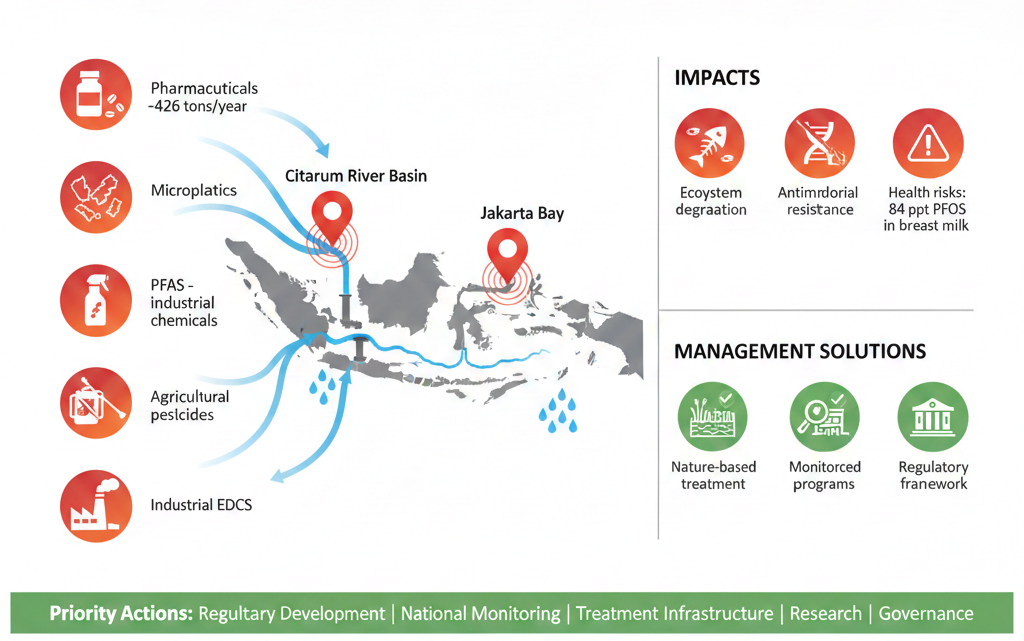
Emerging contaminants in Indonesian aquatic environments encompass a diverse array of chemical substances that have increasingly garnered scientific and regulatory attention due to their persistence, bioaccumulative potential, and toxicological significance. This section systematically categorizes the major classes of emerging contaminants that have been detected and studied in Indonesian waters, examining their sources, occurrence patterns, and concentrations (Table 1). Understanding the distribution and behavior of these contaminants is essential for developing effective management strategies tailored to Indonesia's unique environmental and socioeconomic context. Figure 1 provides a visual overview of the five major emerging contaminant categories, their representative compounds, primary sources, and key contamination statistics documented in Indonesian aquatic systems.
Figure 1. Overview of five major emerging contaminant categories in Indonesian aquatic environments: PPCPs, microplastics, PFAS, pesticides, and EDCs. The diagram shows representative compounds, primary sources, and key contamination statistics for each category.
Pharmaceuticals and Personal Care Products (PPCPs)
Pharmaceuticals and personal care products (PPCPs) constitute a particularly diverse and widespread class of emerging contaminants in Indonesian aquatic environments, reflecting the country's expanding healthcare infrastructure, growing pharmaceutical industry, and increasing consumer use of personal care formulations [13,14]. PPCPs encompass a broad spectrum of biologically active compounds including prescription and over-the-counter medications, veterinary drugs, diagnostic agents, cosmetics, fragrances, and antimicrobial preservatives [15]. Unlike conventional industrial pollutants, PPCPs are specifically designed to be bioactive at low concentrations, often targeting biochemical pathways conserved across species, which raises concerns about their potential effects on non-target aquatic organisms even at trace environmental concentrations [16]. The persistence of many PPCPs through conventional wastewater treatment processes, combined with their continuous introduction into aquatic systems through daily human activities, results in pseudo-persistent contamination patterns where environmental concentrations remain relatively stable despite individual compound degradation [17].
Antibiotics represent one of the most extensively studied PPCP categories in Indonesian waters due to concerns about antimicrobial resistance development and ecotoxicological impacts on aquatic microbial communities [18,13]. Commonly detected antibiotics in Indonesian aquatic environments include fluoroquinolones (ciprofloxacin, norfloxacin), sulfonamides (sulfamethoxazole, sulfadiazine), tetracyclines, macrolides (erythromycin, azithromycin), and beta-lactams (amoxicillin, ampicillin) [19,14]. Hospital effluents serve as significant point sources of antibiotic contamination, with concentrations often orders of magnitude higher than those in receiving waters, reflecting intensive medical use and incomplete removal during on-site treatment where such facilities exist [20,15]. Domestic wastewater also contributes substantial antibiotic loads, particularly in urban areas where self-medication practices are common and pharmaceutical waste disposal into sewage systems occurs frequently [13]. Aquaculture operations, particularly intensive fish and shrimp farming prevalent in Indonesian coastal areas, constitute another important source through prophylactic and therapeutic antibiotic applications, with sulfonamides and tetracyclines being among the most commonly used compounds in these settings [21,22].
Analgesic and anti-inflammatory drugs form another prominent PPCP group detected in Indonesian waters [16]. Paracetamol (acetaminophen), ibuprofen, diclofenac, and naproxen are among the most frequently encountered analgesics, reflecting their widespread over-the-counter availability and high consumption rates in Indonesian society [17,15]. Diclofenac, in particular, has garnered attention due to its known toxicity to vultures and potential impacts on aquatic organisms, even though environmental concentrations in Indonesia remain lower than those reported in some other developing nations [16]. These compounds enter aquatic environments primarily through domestic wastewater following human excretion of parent compounds and metabolites, with excretion rates varying from less than 10% to over 90% depending on the specific drug and individual metabolism [20].
Steroid hormones, both natural estrogens (estrone, estradiol, estriol) and synthetic compounds (ethinylestradiol from contraceptives), have been detected in Indonesian surface waters and wastewater, though at generally lower frequencies and concentrations compared to antibiotics and analgesics [23,24]. These endocrine-active pharmaceuticals are of particular concern due to their ability to disrupt reproductive systems in aquatic organisms at extremely low concentrations (ng/L range), with documented feminization effects in fish populations observed in various countries [16]. The primary sources include domestic wastewater (from human excretion), hospital effluents, and potentially livestock operations, though comprehensive spatial surveys of hormone contamination in Indonesian waters remain limited [25].
Antimicrobial personal care ingredients, particularly triclosan and triclocarban, represent another PPCP category of environmental concern [17,15]. These compounds, widely incorporated into soaps, toothpastes, and cosmetic products for their bactericidal properties, enter wastewater systems during showering and handwashing, subsequently persisting through conventional treatment and accumulating in receiving waters and sediments [15]. Triclosan exhibits toxicity to algae and aquatic invertebrates, and both compounds have been detected in Indonesian coastal waters and sediments, with concentrations generally correlating with population density and urbanization intensity [17].
The spatial distribution of PPCP contamination in Indonesia reflects urbanization patterns, healthcare facility locations, and aquaculture zones [13,14]. Urban rivers and coastal waters receiving municipal wastewater discharges show the highest PPCP concentrations and diversity, with particular hotspots near major cities and hospital complexes [19,26]. Studies have documented seasonal variations in PPCP occurrence, with some compounds showing elevated concentrations during dry seasons when reduced river flows result in lower dilution of wastewater inputs, while others peak during wet seasons due to mobilization from sediments or overflows from inadequate drainage systems [27]. The incomplete removal of PPCPs by conventional wastewater treatment plants—which were designed primarily for organic matter, nutrients, and pathogen removal rather than trace organic contaminant elimination—means that treated effluents continue to introduce these compounds into receiving waters [28,29]. Table 3 summarizes concentrations and loads of selected PPCPs detected across various Indonesian aquatic environments, illustrating the widespread occurrence of these compounds in rivers, reservoirs, coastal waters, and aquaculture systems.
Health and ecological implications of PPCP contamination in Indonesian waters encompass multiple concerns [18,30]. Environmental antibiotic residues may contribute to selection pressure favoring antimicrobial-resistant bacteria, potentially compromising future therapeutic effectiveness of these critical medicines [13]. Mixture effects, where multiple PPCPs co-occur and potentially interact synergistically or additively, remain poorly characterized in the Indonesian context despite being environmentally realistic scenarios [16]. Human health risks from PPCP exposure through drinking water consumption or fish consumption are generally considered low based on current detection levels, but data gaps regarding chronic low-dose exposure effects and potential endocrine disruption warrant precautionary approaches [25,23]. Addressing PPCP contamination requires multi-faceted strategies including source reduction through improved pharmaceutical stewardship and take-back programs, enhanced wastewater treatment incorporating advanced oxidation or adsorption processes capable of removing trace organics, and expanded environmental monitoring to better characterize the extent and trends of PPCP pollution across Indonesia's diverse aquatic environments [15,29].
| Location | Matrix | Compound(s) | Concentration/Load | Reference |
|---|---|---|---|---|
| Upper Citarum River Basin | River basin (total load) | Paracetamol; Amoxicillin | 426.1 tons/year; 343.7 tons/year | [13] |
| Cirata Reservoir, West Java | Reservoir water | 14 antibiotics (ciprofloxacin, enrofloxacin, sulfamethoxazole, trimethoprim, oxytetracycline, etc.) | Higher in wet season; livestock farming primary source | [19] |
| Jakarta Bay (Angke, Ancol) | Coastal seawater | Paracetamol | Angke: 610 ng/L; Ancol: 420 ng/L | [21] |
| Central Java coastal aquaculture | Aquaculture water | Acetaminophen (ACM); Oxytetracycline (OTC) | ACM: up to 5.5±1.9 ng/L; OTC: up to 8.0±3.3 ng/L | [23] |
| Surabaya, East Java | Septic tanks; Surabaya River | Paracetamol; Caffeine | Septic: 15.54 mg/L; River: 10.31 mg/L (caffeine) | [37] |
| Jakarta rivers | River water | Bisphenol A (BPA) | 50–8,000 ng/L | [38] |
| Ciliwung River, Jakarta | River (mass flux) | Multiple PPCPs (DEET, personal care products) | 5–17 tons/year of quantified pollutants | [15] |
| Jakarta rivers | River water | 71 organic contaminants (flame retardants, PCPs, pharmaceuticals) | High concentrations from municipal wastewater | [20] |
Microplastics
Microplastics—plastic particles smaller than 5 mm in size—have emerged as one of the most ubiquitous and visible forms of emerging contaminants in Indonesian aquatic environments, reflecting the nation's rapidly increasing plastic production and consumption alongside inadequate waste management infrastructure [5,6]. Indonesia ranks among the world's top contributors to marine plastic pollution, with an estimated 0.48–1.29 million metric tons of plastic waste entering the ocean annually from inadequately managed terrestrial sources [4]. These microplastics originate from diverse sources including fragmentation of larger plastic debris (secondary microplastics), direct release of industrial plastic pellets and powders, degradation of synthetic textiles releasing microfibers during washing, tire wear particles, and intentional addition of microbeads in cosmetic and personal care products—though the latter source has diminished following regulatory restrictions in several countries [31,8].
The occurrence of microplastics in Indonesian waters has been documented across multiple environmental compartments including rivers, estuaries, coastal seas, sediments, and biota [9,10]. Rivers serve as major conduits transporting land-based plastic waste to marine environments, with microplastic concentrations in Indonesian rivers varying considerably based on upstream urbanization, industrial activities, and proximity to waste disposal sites [1,3]. The Citarum River in West Java, one of the world's most polluted rivers, exhibits particularly high microplastic loads reflecting the intensive industrial and domestic activities in its watershed [2]. Coastal waters around major urban centers including Jakarta, Surabaya, Makassar, and Denpasar show elevated microplastic concentrations, with particle abundance often correlating with population density, tourism intensity, and proximity to river mouths [13,14,32]. The Ciliwung Estuary in Jakarta has been shown to contain microplastics that are subsequently ingested by resident fish species, demonstrating direct food web contamination pathways [33]. Mangrove sediments, which serve as critical nursery habitats for marine organisms, also accumulate substantial microplastic burdens, as documented in the Muara Angke Wildlife Reserve [34].
Microplastic contamination of Indonesian seafood and marine organisms has received increasing research attention due to implications for food safety and ecosystem health [2,7]. Studies have documented microplastic ingestion across a wide range of marine taxa including commercially important fish species, shellfish (particularly mussels, oysters, and clams), crustaceans (shrimp and crabs), and even marine megafauna such as sea turtles and manta rays [9,10]. The ingestion of microplastics by filter-feeding and detritivorous organisms appears particularly prevalent, as their feeding strategies do not discriminate between food particles and plastic fragments of similar size [3]. While current evidence suggests that the majority of microplastics ingested by fish remain in the gastrointestinal tract rather than translocating to muscle tissue consumed by humans, concerns persist regarding potential chemical transfer of plastic-associated contaminants (including additives such as phthalates and flame retardants, as well as persistent organic pollutants that sorb to plastic surfaces) and physical impacts on organism health [8].
The diversity of microplastic types detected in Indonesian waters reflects the varied sources and plastic production patterns [5]. Polyethylene (PE) and polypropylene (PP), the most widely produced thermoplastics used in packaging, bottles, and containers, constitute the dominant polymer types detected in Indonesian marine samples, followed by polystyrene (PS), polyethylene terephthalate (PET), and polyvinyl chloride (PVC) [6,4]. Microfibers—elongated particles derived from synthetic textiles and fishing gear—represent a significant fraction of microplastic pollution in Indonesian coastal waters, highlighting the contribution of domestic laundry wastewater (containing fibers shed from polyester, nylon, and acrylic clothing) and fishing activities (involving degradation of nets and ropes) to this contamination [13]. Fragment morphology, resulting from breakdown of larger debris, predominates in many sampling locations, while pellets (pre-production plastic resin) appear near industrial zones and ports where plastic manufacturing or transport occurs [1]. Table 2 summarizes microplastic occurrence data from selected studies across various Indonesian aquatic environments, illustrating the diversity of contamination patterns, polymer types, and morphologies detected in different environmental matrices.
Seasonal and spatial variability in microplastic distribution patterns reflects complex interactions among sources, hydrodynamics, and environmental factors [2]. Monsoon patterns strongly influence microplastic transport, with increased riverine discharge during wet seasons mobilizing accumulated terrestrial plastic waste and transporting it to coastal and marine environments [3]. Hydrodynamic modeling studies in Indonesian coastal waters have demonstrated complex particle trajectories influenced by tidal currents, wind patterns, and river discharge, helping to identify accumulation zones and transport pathways [46]. Beach environments subject to tourism pressure show elevated microplastic concentrations, particularly following holiday periods and weekends when visitor numbers peak and waste generation increases [14]. Sediments act as important sinks for microplastics, with higher-density polymers and biofouled particles showing greater tendency to settle and accumulate in benthic environments where they may persist for extended periods and provide long-term exposure to sediment-dwelling organisms [7]. The capacity of microplastics to adsorb heavy metals such as lead and copper from the aquatic environment has been demonstrated in Indonesian waters, potentially enhancing toxicity through combined exposure to both plastic particles and sorbed contaminants [47].
The ecological implications of microplastic contamination in Indonesian waters encompass multiple pathways of potential harm [9,10]. Physical effects include ingestion-related impacts such as gut blockage, reduced feeding, and false satiation, which have been demonstrated in various marine organisms though field evidence of population-level consequences remains limited [5]. Chemical effects may arise from leaching of plastic additives (plasticizers, stabilizers, flame retardants, colorants) or transfer of sorbed persistent organic pollutants and metals from ingested microplastics to organism tissues, though the magnitude of this exposure pathway relative to other contamination routes (direct uptake from water, consumption of contaminated prey) remains debated [4]. The potential for microplastics to serve as vectors for pathogenic microorganisms or invasive species, providing transport mechanisms across oceanic distances, represents another ecological concern warranting investigation in the Indonesian archipelagic context [8].
From a human health perspective, microplastic exposure pathways include consumption of contaminated seafood, drinking water (with microplastics detected in both tap water and bottled water globally), and inhalation of airborne particles [6,31]. Current toxicological understanding suggests that larger microplastics (>10 µm) are poorly absorbed from the gastrointestinal tract and thus pose limited direct toxicity risk, though nanoplastics (<1 µm) may exhibit different behavior including potential for cellular uptake and translocation [5]. Greater concern centers on chemical exposures from plastic-associated contaminants, particularly for populations with high seafood consumption rates such as many Indonesian coastal communities [7]. However, comprehensive human health risk assessments specific to Indonesian exposure scenarios remain lacking, and recommended tolerable intake levels for microplastics have not been established [8].
Addressing microplastic pollution in Indonesia requires integrated strategies spanning multiple scales and sectors [1,3]. Source reduction through improved waste management infrastructure—including expansion of waste collection services to underserved areas, development of recycling and circular economy approaches, and reduction of single-use plastic consumption—represents the most effective long-term solution [13]. Wastewater treatment plants incorporating appropriate filtration can remove microplastics from domestic effluents before discharge, though implementation costs and technical requirements must be weighed against other water quality priorities [2]. Public awareness campaigns highlighting the environmental consequences of plastic pollution, combined with regulatory measures restricting problematic single-use items and establishing extended producer responsibility schemes, can help shift consumption patterns and production practices [4]. Enhanced monitoring programs to characterize microplastic abundance, distribution, and trends across Indonesian waters, employing standardized sampling and analytical protocols to ensure data comparability, are essential for assessing the effectiveness of management interventions and identifying priority areas for action [9,6]. International and regional cooperation, including participation in ASEAN initiatives addressing marine plastic pollution and implementation of global agreements such as the emerging UN Plastics Treaty, will be critical for tackling this transboundary challenge that affects Indonesia's marine resources and coastal communities [5,8].
| Location | Matrix/Compartment | Abundance/Concentration | Dominant Polymer Type | Dominant Morphology | Size Range | Reference |
|---|---|---|---|---|---|---|
| Jakarta Bay (9 estuaries) | Surface water (estuaries) | Highest: Dadap River; Order: North Jakarta > Tangerang > Bekasi | Polyethylene (PE) | Fragments | 300–500 µm | [35] |
| 14 harbors across Indonesia | Biota (Anchovies, Stolephorus spp.) | Mamuju: 688±1.15 MPs/ind; Krui: 645±7.02 MPs/ind | Not specified | Fiber and film | 50–500 µm | [36] |
| Indonesian waters (multiple locations) | Biota (25 fish species) | Average: 5.93 MPs particles/fish species; 45% of fish ingested MPs | Not specified | Not specified | Not specified | [9] |
| Citarum River, West Java | River water | High microplastic loads (one of world's most polluted rivers) | Not specified | Not specified | Not specified | [2] |
| Coastal waters (Jakarta, Surabaya, Makassar, Denpasar) | Coastal surface water | Elevated concentrations correlating with population density and tourism | PE, PP, PS, PET, PVC | Fragments, fibers, pellets | Variable | [1] |
| ASEAN region (Indonesia contributes most) | Multiple compartments | Indonesia: highest contributor to marine plastic pollution in ASEAN | PE, PP | Fragments | Variable | [7] |
| Contaminant Category | Major Compounds Detected | Primary Sources | Key Detection Locations |
|---|---|---|---|
| PPCPs | Paracetamol, amoxicillin, ciprofloxacin, sulfamethoxazole, trimethoprim, oxytetracycline, caffeine, triclosan, triclocarban | Hospital effluent, domestic wastewater, aquaculture, pharmaceutical industry | Upper Citarum River Basin, Cirata Reservoir, Jakarta Bay, Surabaya River, Central Java coastal areas |
| Microplastics | PE, PP, PS, PET, PVC (fragments, fibers, pellets; 20–500 µm) | Urban runoff, industrial discharge, fishing activities, textile degradation, waste mismanagement | Jakarta Bay estuaries, Citarum River, coastal waters (Jakarta, Surabaya, Makassar, Denpasar), seafood/fish |
| PFAS | PFOS, PFOA, PFHxS, PFNA, PFHpA | Textile/leather manufacturing, food packaging, firefighting foams, consumer products | Jakarta Bay sediments, breast milk (Jakarta, Purwakarta), consumer products (clothing, packaging) |
| Pesticides | Organophosphates (profenofos, chlorpyrifos), pyrethroids (deltamethrin), carbamates (carbofuran), herbicides (glyphosate, paraquat), neonicotinoids | Rice paddies, vegetable farms, oil palm plantations, agricultural runoff | Rawa Pening Lake, paddy water, river water, lake water, agricultural watersheds |
| EDCs | Phthalates (DEHP, DBP, DEP, DMP), bisphenol A, nonylphenol, octylphenol, PBDEs, TBT | Plastics manufacturing, textile processing, antifouling paints, industrial discharge | Jakarta rivers and bay, harbors, ports, coastal sediments |
Per- and Polyfluoroalkyl Substances (PFAS)
Per- and polyfluoroalkyl substances (PFAS) represent a family of synthetic organofluorine compounds characterized by strong carbon-fluorine bonds that confer exceptional chemical stability and resistance to environmental degradation [5,6]. Comprising over 4,700 individual chemicals, PFAS have been extensively used since the 1940s in diverse industrial applications and consumer products due to their unique properties including water and oil repellency, thermal stability, and surfactant characteristics [4]. These “forever chemicals”—a term reflecting their extraordinary environmental persistence—have emerged as contaminants of critical concern globally, with detection in drinking water sources, surface waters, groundwater, sediments, and biota across all continents [31,8].
In the Indonesian context, systematic studies on PFAS contamination in environmental waters remain limited compared to other emerging contaminant classes, though available evidence suggests widespread occurrence [39,40]. The primary PFAS compounds of concern include perfluorooctanoic acid (PFOA), perfluorooctanesulfonic acid (PFOS), perfluorohexane sulfonic acid (PFHxS), and their precursors, all of which have been detected in various Indonesian environmental matrices (Table 4) [39]. Historical data from 2004 revealed the presence of PFOS and PFOA in sediment samples collected from Jakarta Bay, with PFOS detected in all samples and PFOA concentrations reaching up to 6.1 µg/kg dry weight [39]. More concerning are findings from biomonitoring studies: breast milk samples from women in Jakarta and Purwakarta showed detectable levels of multiple PFAS including PFOS (found in all twenty women sampled), PFHxS (detected in 45% of samples), perfluorononanoic acid (PFNA), and perfluoroheptanoic acid (PFHpA) [39]. The average PFOS concentration in Indonesian breast milk was 84 parts per trillion (ppt), more than four times higher than the drinking water health advisory limit of 20 ppt for combined PFOA, PFOS, PFHxS, PFHpA, and PFNA established in some jurisdictions, with individual samples exceeding this threshold by more than twelve-fold [39].
Major sources of PFAS contamination in Indonesia are diverse and reflect the country's industrial profile. Manufacturing facilities producing textiles, leather goods, food packaging materials, and non-stick coatings represent significant point sources, particularly in industrial zones such as those in West Java and East Java [40,41]. Firefighting training activities at airports and military installations, where aqueous film-forming foams (AFFF) containing PFAS have been extensively used, constitute another important source category [4]. A comprehensive product testing study found that 62% of Indonesian samples analyzed—including clothing items and food packaging materials—contained elevated levels of PFAS above safety limits proposed by the European Union for consumer products [40,41]. The widespread use of PFAS-containing products in Indonesian households, combined with inadequate waste management infrastructure, creates diffuse sources through landfill leachate and improper disposal [8].
The environmental persistence of PFAS poses particular challenges in tropical aquatic ecosystems. The strong carbon-fluorine bonds resist hydrolysis, photolysis, and microbial degradation processes that typically attenuate other organic contaminants [5]. This persistence, combined with the water solubility of many PFAS, facilitates their transport through hydrological systems and accumulation in both surface and groundwater [8]. Long-chain PFAS such as PFOS and PFOA also exhibit bioaccumulation potential, concentrating in aquatic organisms and potentially biomagnifying through food webs [31]. The implications for Indonesian fisheries and aquaculture—sectors employing millions and providing primary protein sources for the population—are concerning but remain inadequately characterized [6].
Despite growing international recognition of PFAS risks, Indonesia currently lacks specific regulations addressing these substances in environmental media or establishing maximum allowable concentrations in drinking water [39]. PFAS are essentially absent from national monitoring programs, and analytical capacity to detect and quantify these compounds at environmentally relevant concentrations (often in the parts per trillion range) remains limited [39,8]. This regulatory gap is particularly significant given that PFAS contamination in developing nations is projected to increase as industrialization continues, following patterns observed in China where rapid economic growth corresponded with escalating PFAS levels [6,4]. The limited research base on PFAS in Indonesia and Southeast Asia more broadly—with approximately 90% of Asian PFAS studies originating from China, Japan, and South Korea [6]—underscores the urgent need for expanded monitoring, research on exposure pathways specific to Indonesian populations, and development of appropriate regulatory frameworks to address this class of persistent and potentially hazardous contaminants.
| Location/Sample Type | Matrix | PFAS Compound(s) | Concentration/Detection | Reference |
|---|---|---|---|---|
| Jakarta Bay (2004 data) | Sediment | PFOS; PFOA | PFOS: detected in all samples; PFOA: up to 6.1 µg/kg dry weight | [39] |
| Jakarta and Purwakarta | Breast milk | PFOS; PFHxS; PFNA; PFHpA | PFOS: 84 ppt average (all 20 women sampled); PFHxS: 45% detection frequency | [39] |
| Indonesia (national) | Consumer products (clothing, food packaging) | Total PFAS | 62% of samples had high PFAS levels above EU safety limits | [40] |
| Indonesia (national) | Various products | PFOS; PFOA | Detected in textiles, leather, food packaging | [41] |
Pesticides and Agricultural Chemicals
Modern pesticides represent a significant class of emerging contaminants in Indonesian aquatic environments, driven by the country's role as a major agricultural producer and the intensification of farming practices over recent decades [11,43]. While legacy organochlorine pesticides such as DDT and its metabolites have been extensively studied and largely phased out, contemporary pesticide use has shifted toward organophosphates, pyrethroids, carbamates, neonicotinoids, and various herbicides [1]. These modern pesticides, though generally less persistent than their predecessors, can still pose significant risks to aquatic ecosystems and human health, particularly when inadequately managed or when applied in proximity to water bodies [48].
Organophosphate insecticides remain among the most widely detected pesticide residues in Indonesian waters, despite growing concerns about their neurotoxicity and ecotoxicological impacts [43,11]. Profenofos, chlorpyrifos, and acephate are commonly used in rice cultivation and vegetable farming, with detection frequencies varying by region and agricultural intensity [42]. A comprehensive study of Rawa Pening Lake in Central Java, an important water body surrounded by intensive agricultural activities, revealed that profenofos was the most abundant organophosphate pesticide detected in both water and sediment samples, reflecting its widespread application in the surrounding paddy fields and vegetable farms [42]. The transport of these pesticides from agricultural lands to aquatic environments occurs primarily through surface runoff during rainfall events, with concentrations often peaking during the monsoon season when intense precipitation mobilizes pesticide residues from treated fields [44]. Given Indonesia's tropical climate with pronounced wet and dry seasons, this seasonal pulsing of pesticide contamination presents particular challenges for aquatic organisms adapted to relatively stable chemical environments.
Pyrethroid insecticides, including deltamethrin, cypermethrin, and cyhalothrin, have gained popularity as alternatives to organophosphates due to their perceived lower mammalian toxicity and rapid environmental degradation under ideal conditions [11]. These synthetic analogs of natural pyrethrins are extensively employed in Indonesian rice fields, where they target a range of insect pests including stem borers, leafhoppers, and planthoppers [11,43]. However, pyrethroids exhibit high toxicity to aquatic invertebrates and fish, even at very low concentrations, and their degradation can be inhibited under conditions of low light and temperature—factors less problematic in tropical environments but still relevant during cloudy monsoon periods or in shaded waterways [48]. Carbamate insecticides, particularly carbofuran, also feature prominently in Indonesian agricultural practices, especially in rice and maize cultivation [11,42]. The extensive monitoring of pesticide residues across Indonesian agricultural commodities and environmental matrices has documented the presence of carbamate, pyrethroid, and organophosphate residues in rice, soybeans, vegetables, paddy water, river water, lake water, and even marine waters, indicating the widespread spatial extent of pesticide contamination (Table 5) [43].
Herbicides constitute another important category of pesticide contamination in Indonesian waters, with compounds such as glyphosate, paraquat, and 2,4-D being widely applied for weed control in plantations, rice fields, and along infrastructure corridors [1]. Glyphosate, the world's most widely used herbicide, is extensively employed in Indonesian oil palm and rubber plantations, as well as in rice farming systems [11]. While glyphosate is often characterized as having relatively low acute toxicity to vertebrates, concerns have emerged regarding its effects on aquatic microbial communities, its potential endocrine-disrupting properties, and the toxicity of its degradation products and formulation adjuvants [48]. Paraquat, despite being banned or restricted in many countries due to its extreme human toxicity and environmental persistence, continues to be used in some Indonesian agricultural contexts, posing risks to both applicators and aquatic ecosystems receiving runoff from treated areas [43].
Neonicotinoid insecticides, a relatively newer class of systemic pesticides that act on insect nicotinic acetylcholine receptors, have gained market share in recent years due to their effectiveness against sucking and chewing insects and their systemic properties allowing plant uptake and translocation [11]. Imidacloprid, thiamethoxam, and clothianidin are among the neonicotinoids used in Indonesian agriculture, particularly in rice, horticulture, and plantation crops. These compounds are highly water-soluble, facilitating their transport in aquatic systems, and have been implicated in declines of beneficial insects including pollinators globally [48]. Their sub-lethal effects on aquatic invertebrates and potential for bioaccumulation in aquatic food webs warrant greater research attention in the Indonesian context, where such studies remain limited [30,1].
Regional variation in pesticide types and contamination patterns reflects Indonesia's diverse agricultural landscape. In the intensive rice-growing regions of Java, organophosphates, carbamates, and pyrethroids dominate, with peak concentrations associated with planting and pre-harvest application periods [11,43]. The vast oil palm plantations of Sumatra and Kalimantan contribute herbicides (particularly glyphosate and paraquat) and insecticides targeting specific plantation pests, while highland vegetable-growing areas employ diverse pesticide cocktails including fungicides alongside insecticides and herbicides [42,44]. This spatial heterogeneity in pesticide use patterns necessitates region-specific monitoring and management strategies that account for local agricultural practices, cropping calendars, and hydrological characteristics.
Despite the documented presence of pesticide residues in various Indonesian environmental matrices, significant knowledge gaps remain regarding their long-term ecological impacts, mixture toxicity effects when multiple pesticides co-occur, and human health risks from chronic low-level exposure through drinking water and food [1,30]. Furthermore, although some pesticide residues in food commodities remain below maximum residual limits established by Indonesian national standards, concentrations are sometimes close to these thresholds, and standards for many newer pesticides and their metabolites have yet to be established [43]. The detection of pesticide residues even after organochlorine insecticides were banned highlights the persistence of these legacy contaminants, while the continued detection of currently-used pesticides underscores the ongoing nature of agricultural contamination [43,48]. Addressing pesticide contamination in Indonesian waters will require integrated approaches encompassing improved application practices, buffer zones to protect water bodies, promotion of integrated pest management strategies that reduce chemical dependency, and enhanced regulatory oversight and enforcement of pesticide registration and use regulations.
| Location | Matrix | Pesticide Type/Compound | Key Findings | Reference |
|---|---|---|---|---|
| Rawa Pening Lake, Central Java | Water and sediment | Organophosphates (profenofos highest); Organochlorines | Profenofos most abundant; used in paddy and vegetable fields | [42] |
| Indonesia (nationwide) | Rice, soybeans, vegetables, paddy water, river water, lake water, sea water | Organochlorines, organophosphates, carbamates, pyrethroids | Residues detected in multiple environmental matrices and food commodities | [43] |
| Southeast Asia/Indonesia | Paddy fields | Carbofuran (carbamate); Deltamethrin (pyrethroid); Chlorpyrifos (OP) | Widely employed in Indonesian rice fields | [11] |
| Opak Watershed, Java | Agricultural runoff to river | Organophosphate residues | Runoff containing OP residues reduces river water quality | [44] |
Industrial Chemicals and Endocrine Disrupting Chemicals (EDCs)
Industrial chemicals with endocrine-disrupting properties represent a particularly insidious class of emerging contaminants in Indonesian aquatic environments, as these compounds can interfere with hormonal systems of exposed organisms at extremely low concentrations, often in the parts per trillion range [5,4]. Endocrine disrupting chemicals (EDCs) encompass a diverse array of substances including plasticizers (phthalates, bisphenols), flame retardants (polybrominated diphenyl ethers or PBDEs), alkylphenols and their ethoxylates (nonylphenol, octylphenol), organotins, and various industrial intermediates and by-products [6,8]. These compounds are ubiquitous in modern industrial societies, incorporated into plastics, electronics, textiles, construction materials, and consumer products, with subsequent release to the environment through manufacturing processes, product degradation, and waste disposal [31]. The endocrine-disrupting effects—including reproductive impairment, developmental abnormalities, immune system dysfunction, and metabolic disorders—have been documented across multiple taxonomic groups, raising concerns about population-level impacts on aquatic biodiversity and potential human health risks through environmental exposure pathways [4,5].
Phthalates, a group of diesters of phthalic acid used primarily as plasticizers to impart flexibility to polyvinyl chloride (PVC) products, rank among the most frequently detected EDCs in Indonesian environmental waters [20,17]. Dimethyl phthalate (DMP), diethyl phthalate (DEP), di-n-butyl phthalate (DBP), and di(2-ethylhexyl) phthalate (DEHP) have been identified in rivers, coastal waters, and sediments, with concentrations often correlating with industrial discharge points and urban population density [15]. Studies in Jakarta Bay and surrounding coastal areas have documented the widespread occurrence of multiple phthalate compounds, reflecting the extensive use of PVC materials in Indonesian manufacturing and construction sectors, as well as their incorporation into personal care products, medical devices, and food packaging [16]. DEHP, classified as a priority pollutant due to its suspected carcinogenic properties and demonstrated reproductive toxicity in laboratory studies, has been detected in both dissolved and particulate phases in Indonesian marine environments, with sediments serving as important reservoirs where phthalates can accumulate and persist [20]. The lipophilic nature and persistence of certain phthalates facilitate their bioaccumulation in aquatic organisms, though biotransformation and excretion processes limit biomagnification through food webs for most compounds in this class [17].
Bisphenol A (BPA), an industrial chemical used extensively in the production of polycarbonate plastics and epoxy resins lining food and beverage containers, represents another well-studied EDC of concern globally, though research specific to Indonesian environmental concentrations remains limited [16,25]. BPA exhibits estrogenic activity and has been associated with reproductive abnormalities, developmental effects, and metabolic disorders in wildlife and laboratory animals exposed during critical developmental windows [23]. Environmental sources include leaching from plastic products, discharge from manufacturing facilities, and release during waste incineration, with wastewater treatment plants serving as major point sources where incomplete removal allows BPA passage into receiving waters [4]. Recent regulatory actions in various countries restricting BPA use in certain consumer products (particularly infant bottles and food contact materials) have driven substitution toward alternative bisphenols such as bisphenol S (BPS) and bisphenol F (BPF), though emerging evidence suggests these replacements may exhibit similar endocrine-disrupting properties, highlighting the challenge of regrettable substitution in chemical management [5,6].
Alkylphenols, particularly nonylphenol (NP) and octylphenol (OP), constitute another important EDC category detected in Indonesian waters [20,15]. These compounds are primarily environmental degradation products of alkylphenol ethoxylates (APEs), which are widely used as non-ionic surfactants in industrial processes, detergents, and emulsifiers [17]. Paradoxically, the biodegradation of APEs under anaerobic conditions prevalent in sediments and inadequately aerated wastewater treatment systems produces nonylphenol and octylphenol, which are more persistent and more potently estrogenic than their parent compounds [16]. Nonylphenol has been detected in Indonesian coastal sediments and waters at concentrations raising concern for benthic organism exposure, with documented effects in aquatic organisms including feminization of male fish, impaired reproduction, and altered sex ratios in populations [20,15]. The textile industry, which represents a significant manufacturing sector in Indonesia particularly in Java, is a notable source of APE and alkylphenol contamination through discharge of processing chemicals used in dyeing and finishing operations [13].
Flame retardants, particularly polybrominated diphenyl ethers (PBDEs), have emerged as global contaminants of concern due to their persistence, bioaccumulative properties, and potential endocrine-disrupting and neurotoxic effects [8,6]. These brominated compounds have been extensively incorporated into electronics, textiles, furniture foams, and building materials to meet flammability standards, with subsequent environmental release occurring during product manufacturing, use, and disposal, particularly through improper electronic waste recycling and open burning practices [31]. Indonesia's growing electronics manufacturing sector and role as a destination for electronic waste imports raise concerns about PBDE contamination, though systematic environmental monitoring data for these compounds remains scarce compared to more extensively studied regions [5]. The chemical structure and properties of PBDEs—including their lipophilicity, resistance to degradation, and tendency to bioaccumulate and biomagnify through aquatic food webs—parallel those of legacy persistent organic pollu