Emerging Contaminants in Indonesia: Occurrence, Management Practices, and Regulatory Challenges - A Review
Publication Date (Web): February 8, 2026
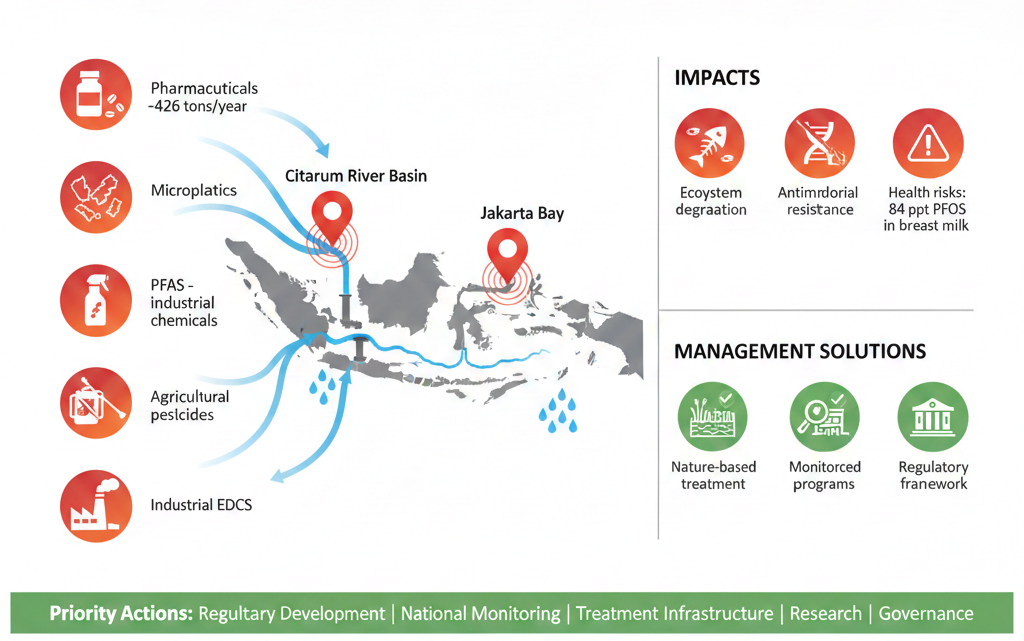
Emerging contaminants (ECs) including pharmaceuticals, microplastics, per- and polyfluoroalkyl substances (PFAS), modern pesticides, and endocrine-disrupting chemicals pose growing threats to Indonesian aquatic ecosystems and human health. This comprehensive review examines the occurrence, sources, environmental impacts, and management approaches for ECs across Indonesia's diverse aquatic environments. Analysis of published research reveals pervasive contamination in Indonesian surface waters, sediments, and biota, with particularly severe pollution documented in Java's industrialized river basins and coastal zones. The Citarum River Basin and Jakarta Bay exemplify critical hotspots where pharmaceutical loads reach hundreds of tons annually (426.1 tons paracetamol, 343.7 tons amoxicillin in Upper Citarum), microplastic abundances rank among the world's highest, and complex industrial chemical mixtures fundamentally alter ecosystem function. PFAS contamination in breast milk samples (average 84 ppt PFOS) exceeds international health advisory limits, while pesticide residues from intensive agriculture contaminate lakes and reservoirs. Indonesia's regulatory framework faces critical gaps, as Government Regulation No. 22 of 2021 addresses conventional pollutants but lacks specific standards for most ECs. Wastewater treatment infrastructure serves less than 10\% of the population, with conventional technologies achieving incomplete EC removal. Monitoring capacity remains constrained by limited analytical infrastructure concentrated in Java, creating substantial geographic data gaps. Despite these challenges, opportunities exist through the Citarum Harum restoration program, growing research capacity, and context-appropriate technologies including nature-based treatment systems and locally-produced activated carbon. Priority interventions include phased regulatory development for well-documented substances, establishment of national monitoring programs with strategic geographic coverage, accelerated wastewater infrastructure deployment emphasizing decentralized solutions, targeted research on tropical-specific fate and effects, and strengthened governance through improved inter-agency coordination. This review provides the first comprehensive synthesis of EC contamination across Indonesia's archipelago, identifying critical knowledge gaps and actionable pathways for protecting aquatic biodiversity, safeguarding fisheries, and achieving sustainable development goals.