Skip to main content Skip to main navigation menu Skip to site footer

Vol. 1 No. 2 (2024)

This issue focuses on innovative research in developing materials for water treatment, highlighting sustainable solutions that address pressing environmental challenges. The featured articles explore various topics, including Advanced filtration technology, nanotechnology applications, photocatalytic processes, and sustainable materials development. The issue serves as a platform for showcasing cutting-edge research that merges material science with environmental engineering, emphasizing innovation and practicality in tackling global water challenges. It aims to inspire interdisciplinary collaboration and drive advancements in the pursuit of green and sustainable solutions. 

Table of Contents

ARTICLES

Photocatalytic degradations of organic pollutants in wastewater using hydrothermally grown ZnO nanoparticles

Full Text PDF

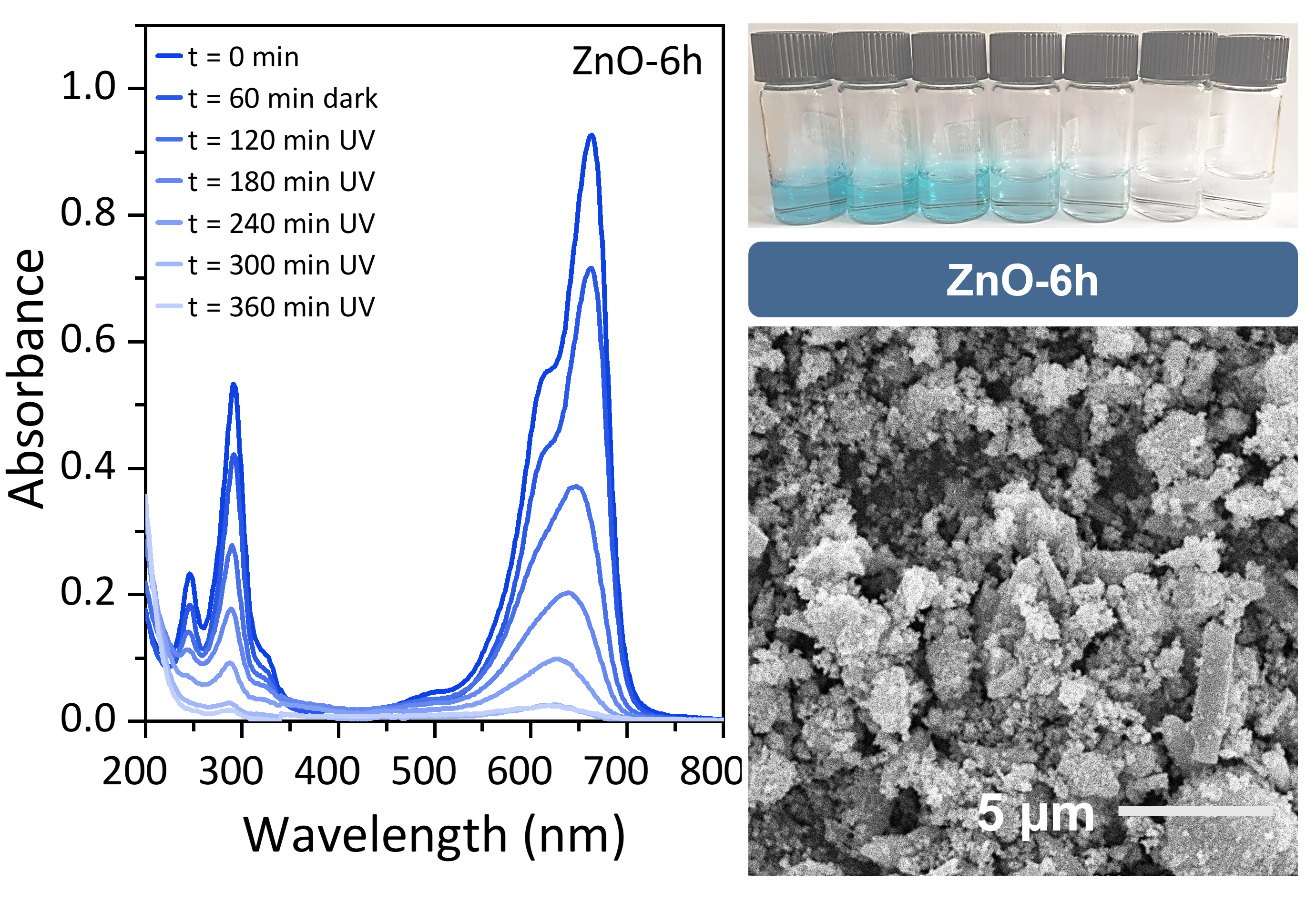
The increasing prevalence of organic pollutants in wastewater poses a significant environmental challenge due to their persistence and harmful effects. Photocatalysis using semiconductor nanoparticles, such as ZnO, has emerged as a promising approach for pollutant degradation, but optimizing the structural and functional properties of these materials remains a critical challenge. In this study, ZnO nanoparticles were synthesized via a hydrothermal method with varying durations (4, 6, and 8 hours) to investigate the impact of synthesis time on their photocatalytic efficiency. The structural and compositional properties were characterized using SEM, XRD, and EDS analyses, revealing that longer synthesis times improve crystallinity and alter the Zn:O atomic ratio, affecting defect density and stoichiometry. Photocatalytic performance was evaluated through the degradation of an organic pollutant under UV illumination. ZnO-6h exhibited the highest rate constant (k=0.017 min−1), outperforming ZnO-4h (k=0.016 min−1) and ZnO-8h (k=0.013 min−1). This superior activity is attributed to an optimal combination of high crystallinity, intermediate morphology, and the presence of oxygen vacancies that enhance charge carrier dynamics. The findings demonstrate that synthesis duration is a critical parameter in tuning the structural and photocatalytic properties of ZnO nanoparticles. This study provides insights into the design of ZnO-based photocatalysts and underscores their potential for environmental remediation. Future research could extend these findings by exploring scalability and pollutant-specific applications, paving the way for more efficient wastewater treatment technologies.
Congo red dye adsorption using ZnAl layered double hydroxide fabricated using hydrothermal methods

Full Text PDF

Industrial dye pollutants, particularly azo dyes like Congo red, pose significant environmental and health risks due to their toxic and non-biodegradable nature. This study assesses ZnAl Layered Double Hydroxide (ZnAl LDH) as an effective adsorbent, incorporating comprehensive materials characterization and adsorption isotherm analyses. Materials characterization using SEM and XRD confirmed the structural integrity and morphological suitability of ZnAl LDH for dye adsorption. Results demonstrated that ZnAl LDH, particularly the HMTA-based variant (h-ZnAl LDH), achieved superior adsorption capacities of up to 17.8 mg/g, significantly outperforming the urea-based (u-ZnAl LDH) with capacity of 12.3 mg/g. Kinetic analysis showed that the pseudo-second-order (PSO) model provided a better fit (R2 = 0.995) than the pseudo-first-order (PFO) model, indicating that chemisorption plays a dominant role in the adsorption mechanism. The adsorption process was also best described by the Langmuir isotherm model (R2 = 0.989), indicating monolayer adsorption on a homogeneous surface, while the Freundlich model (R2 = 0.944) also provided a reasonable fit, suggesting some degree of multilayer adsorption on heterogeneous surfaces. The superior performance of HMTA-based ZnAl LDH presents a significant advancement in wastewater treatment technologies

Role of Ni dopant on the improvement of ZnO-based reusable photocatalytic materials

Full Text PDF

This study investigates the impact of Ni doping on the enhancement of ZnO-based reusable photocatalytic materials. Ni concentrations derived from nickel chloride hexahydrate were 0 wt% (ZN-1), 1 wt% (ZN-2), and 3 wt% (ZN-3). Field-emission scanning electron microscopy (FESEM) analysis reveals a significant morphological transformation from flower-like structures in pure ZnO to nanoridges in Ni-doped ZnO. X-ray diffraction data indicate a reduction in crystalline quality with Ni incorporation. UV-Vis spectroscopy shows an increase in the bandgap from 3.22 eV for pure ZnO (ZN-1) to 3.34 eV for Ni-doped ZnO (ZN-2 and ZN-3). Photocatalytic efficiency improves markedly, achieving 30%, 60%, and 80% degradation for ZN-1, ZN-2, and ZN-3, respectively, after 1-hour illumination. Notably, the photocatalytic performance remains robust even after five recycling cycles. These findings reveal the potential of Ni-doped ZnO as a cost-effective, reusable, and highly efficient photocatalytic material.

Adsorption and Diffusion Energies Calculation of Sodium Ion Battery using GeTe Anode : A Density Functional Theory Study

Full Text PDF

Sodium batteries are the most potential candidates for future and green energies storage systems. However, there are problems with structural instability in the electrodes, which affect battery performance. Therefore, this study investigated the adsorption and diffusion mechanisms at the anode using a phase puckered Germanium Telluride (GeTe) monolayer structure. Density functional theory (DFT) calculations show that the Na-adsorbed hollow Te-Te structure is the most stable adsorption configuration (-1.25 eV). In the diffusion scheme, Na atoms move through the hollow Te-Te (initial state) followed by the hollow Ge-Ge (transition state), then to the hollow Te-Te (final state). The diffusion mechanism that occurs has lowest energy of 0.09 × 10⁻⁴ eV. These results suggest that the phase puckered GeTe monolayer has the potential as a high-performance sodium battery anode.

Hydrothermal synthesis of Nb2O5-natural zeolite composite for enhanced adsorptive removal of anionic and cationic dye

Full Text PDF

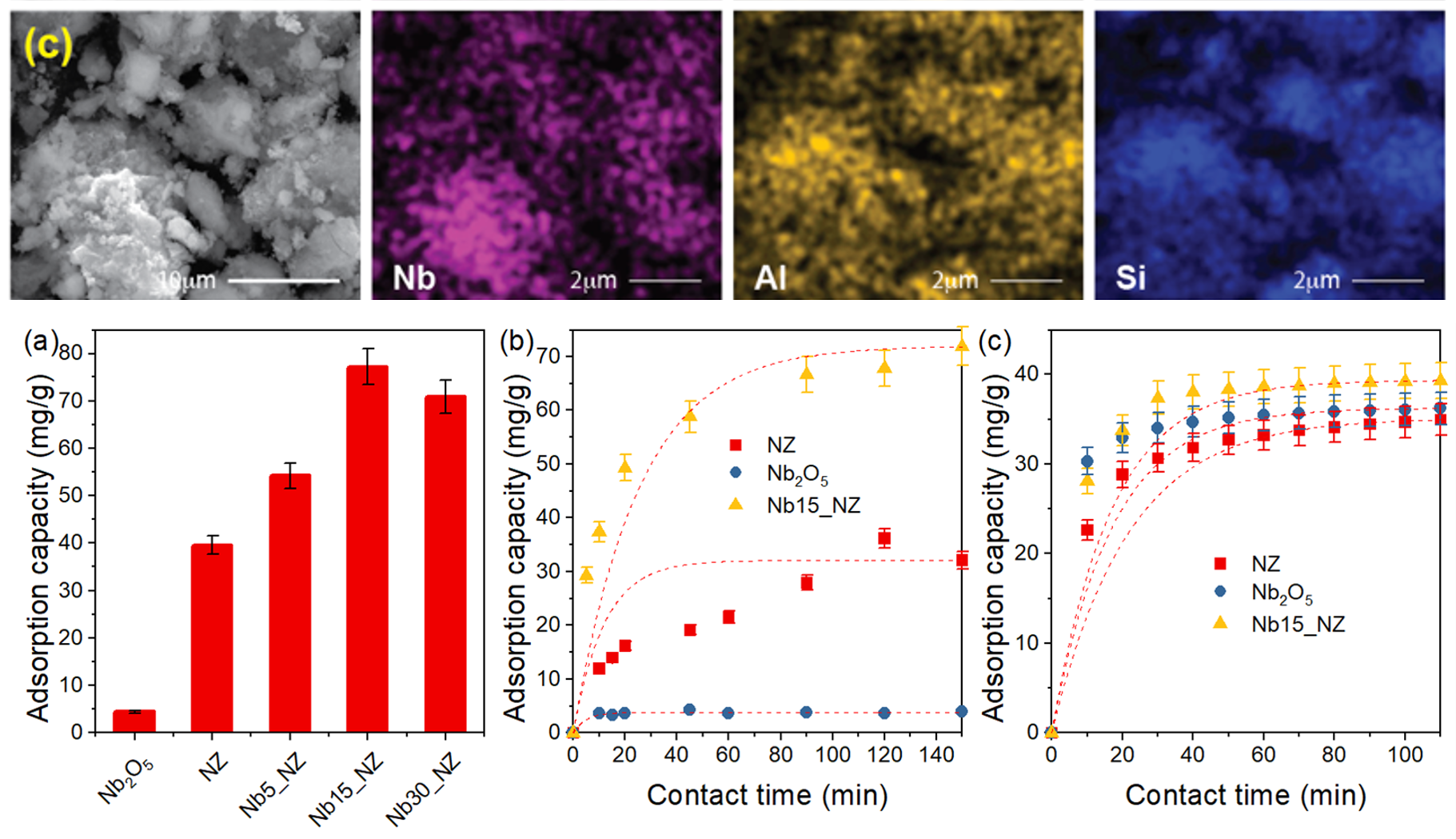
The imperative to mitigate dye pollution from wastewater has propelled the exploration of efficient adsorbents. This study deals with the preparation and evaluation of Nb2O5-supported natural zeolite (NbX_NZ) for enhanced dye adsorption performance. A facile hydrothermal method was employed to prepare NbX_NZ with varying niobium precursor loadings. Comprehensive material characterization employing FESEM, EDX, TGA, XRD, and FTIR analyses elucidate the successful incorporation of Nb2O5, revealing altered morphological and thermal properties. The adsorption test exhibited a notable augmentation in adsorption capacity for Congo red dye, particularly with the Nb15_NZ sample, showcasing a nearly two-fold increase compared to the parent natural zeolite. The findings underscore the potential of NbX_NZ as promising materials for anionic dye adsorption, paving the way for advancing wastewater treatment solutions and further investigations into metal oxide-modified zeolites.