Skip to main content Skip to main navigation menu Skip to site footer

Vol. 3 No. 1 (2026)

This issue presents six contributions that span three closely connected fronts of sustainable-materials research. A first group addresses water-pollution control, examining how advanced photocatalysts and adsorbents can be engineered to remove organic dyes and pharmaceutical residues from aqueous systems. A second group focuses on nanofiber and membrane fabrication science, where electrospinning and related techniques are used to translate active materials into self-standing, retrievable architectures suitable for repeated deployment. A third contribution extends the issue's scope toward energy conversion, using device-level simulation to map optimization pathways for next-generation thin-film photovoltaics.
Read together, these papers reflect a shared methodological outlook: the deliberate pairing of materials design with operational practicality — recoverability, scalability, and device-level performance — that increasingly defines sustainable-materials engineering. They also illustrate the field's growing tendency to treat fabrication strategy, material composition, and end-use performance as a single integrated design problem rather than as separate optimization steps.

Table of Contents

REVIEW

Electrospun ZnO Nanofiber Membranes for Photocatalytic Water Treatment: A Comparative Review of Fabrication Strategies

Full Text New Website
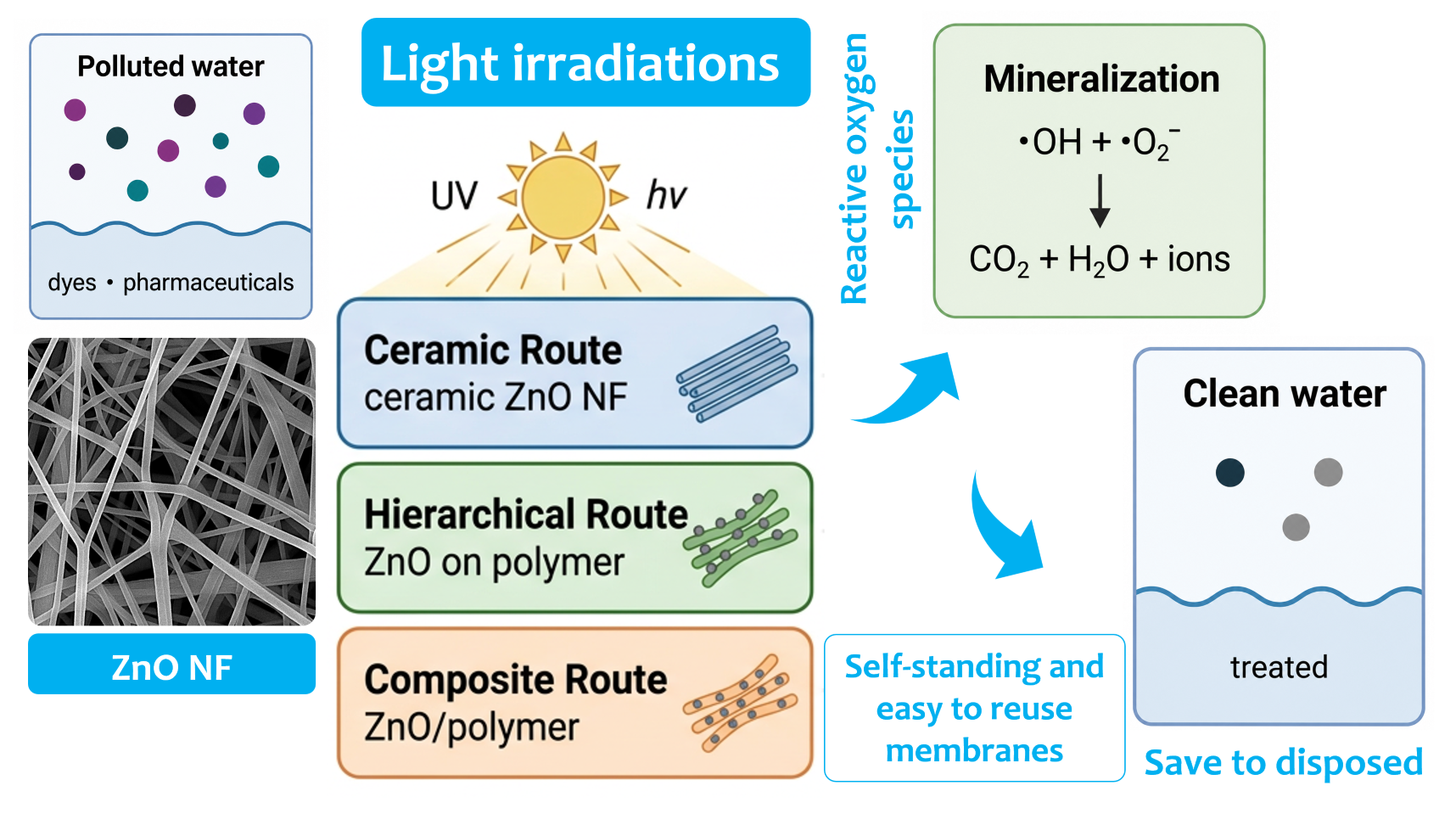
Electrospun ZnO nanofiber membranes are promising candidates for photocatalytic water treatment, offering directional charge transport, high surface-to-volume ratio, and self-standing membrane architectures that enable straightforward catalyst retrieval and reuse, a critical advantage over dispersed semiconductor nanoparticle systems where post-treatment recovery remains a major bottleneck. However, the fabrication route fundamentally determines membrane morphology, mechanical integrity, retrievability, and photocatalytic performance. This review classifies electrospinning-based fabrication into three routes: the Ceramic Membrane Route (precursor/polymer blending followed by calcination), the Hierarchical Membrane Route (secondary ZnO growth on electrospun polymer scaffolds), and the Composite Membrane Route (direct electrospinning of pre-synthesized ZnO/polymer dispersions). The Ceramic Membrane Route yields high-crystallinity membranes with up to 100% pollutant degradation but poor mechanical integrity that hinders membrane retrieval. The Composite Membrane Route provides single-step fabrication with the best demonstrated reusability (10 cycles at 97–99% retention), 200-fold lower zinc leaching, and excellent mechanical robustness for repeated retrieval and deployment, positioning it as one of the more operationally mature options for near-term deployment. The Hierarchical Membrane Route delivers the highest surface area, the fastest degradation kinetics, and uniquely combines photocatalysis with membrane filtration in a single device, making it a particularly promising long-term direction once its multi-step processing is streamlined and continuous-flow scale-up is realized. This comparative framework guides the selection of fabrication strategy based on membrane retrievability, performance, and development-stage requirements.
ARTICLES

Influence of Nb Dopant Concentration on the Structural Properties and Photocatalytic Performances of Hydrothermally Synthesized ZnO for Multi-Pollutant Degradation

Full Text New Website
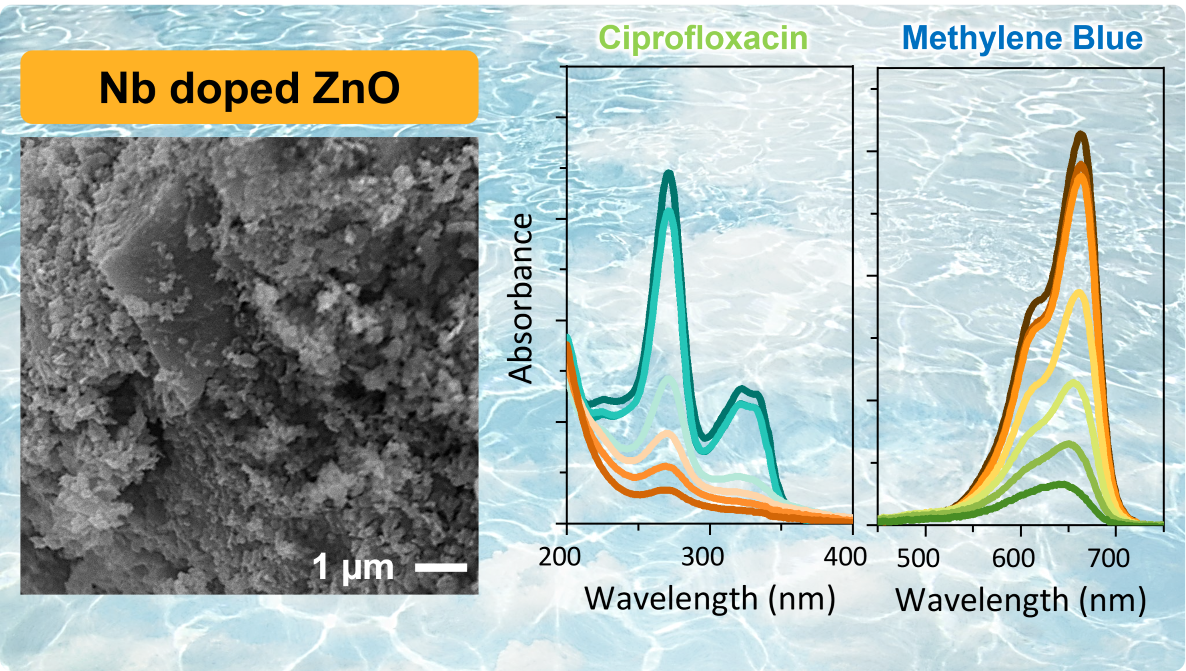
The development of effective photocatalysts for multi-pollutant wastewater remediation remains a significant environmental concern. In this study, Nb-doped ZnO photocatalysts with different Nb concentrations (0-6%) were synthesized using a hydrothermal process to systematically examine the influence of dopant concentration on materials characteristics and photocatalytic performance. According to X-ray diffraction analysis Nb incorporation preserved the hexagonal wurtzite ZnO structure with only slight lattice parameter changes, suggesting limited substitutional doping. Morphological observations showed that moderate Nb doping slightly enhanced particle structure and reduced agglomeration. The photocatalytic activity was evaluated through the degradation of ciprofloxacin (CIP) and methylene blue (MB) under UV irradiation, both in single and mixed pollutant systems. In single systems, the catalysts achieved high degradation efficiencies of up to 93.09% for CIP and 92.03% for MB after 120 min. In the mixed system, the efficiencies slightly decreased due to competitive interactions, reaching up to 87.57% (CIP) and 84.08% (MB). Kinetic analysis indicates pseudo-first-order behavior, with apparent rate constants (k) of approximately 0.0218 min<sup>−1</sup> (CIP) and 0.0199 min<sup>−1</sup> (MB) for the optimally doped Nb4-ZnO sample, which are comparable to those of pristine ZnO. The findings highlight the critical role of dopant concentration in tailoring structural and electronic properties, providing valuable insights into Nb-dopant optimization strategies for efficient multi-pollutant photocatalytic wastewater remediation.

Electrospun PAN/PVP/ZnO Nanofiber Membrane as a Photocatalyst for Methylene Blue Degradation under UV Irradiation

Full Text New Website
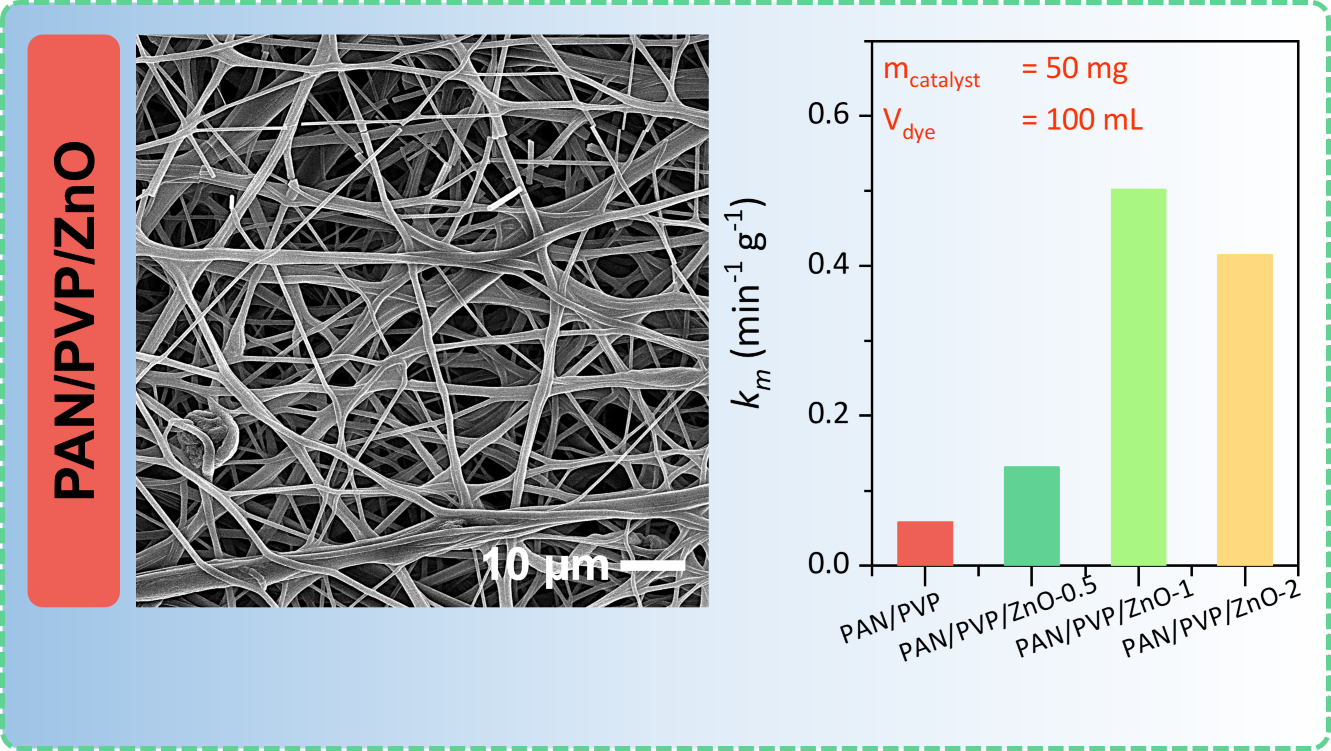
Textile dye pollution remains a critical environmental concern, necessitating the development of efficient and recoverable photocatalysts for wastewater remediation. In this study, polyacrylonitrile/polyvinylpyrrolidone/zinc oxide (PAN/PVP/ZnO) nanofiber membranes were fabricated via electrospinning with varying ZnO loadings (0, 0.5, 1, and 2 mmol) and evaluated for the photocatalytic degradation of methylene blue (MB) under ultraviolet (UV) irradiation. Scanning electron microscopy (SEM) revealed continuous, bead-free nanofibers with mean diameters of 355–552 nm, and energy dispersive X-ray spectroscopy (EDS) confirmed systematic Zn incorporation up to 34.52 wt%. A comparative study demonstrated that heat treatment at 450 °C was essential for converting the Zn(NO<sub>3</sub>)<sub>2</sub> precursor into the photocatalytically active ZnO phase. X-ray diffraction (XRD) and Fourier-transform infrared spectroscopy (FTIR) confirmed the retention of the polymer matrix integrity. Among the tested formulations, PAN/PVP/ZnO-1 (1 mmol) exhibited the highest photocatalytic performance, achieving approximately 95% MB degradation within 180 min, with a pseudo-first-order rate constant of k = 0.0251 min<sup>−1</sup> (R<sup>2</sup> = 0.9926), approximately 9 times faster than the neat PAN/PVP membrane. Higher ZnO loading (2 mmol) resulted in reduced photocatalytic performance. These findings indicate that 1 mmol ZnO is the optimal loading for PAN/PVP nanofiber photocatalysts, offering a promising recoverable membrane system for photocatalytic dye removal from wastewater.

Design and Optimization of CsPbI<sub>3</sub> Perovskite Solar Cells Using SCAPS-1D

Full Text New Website
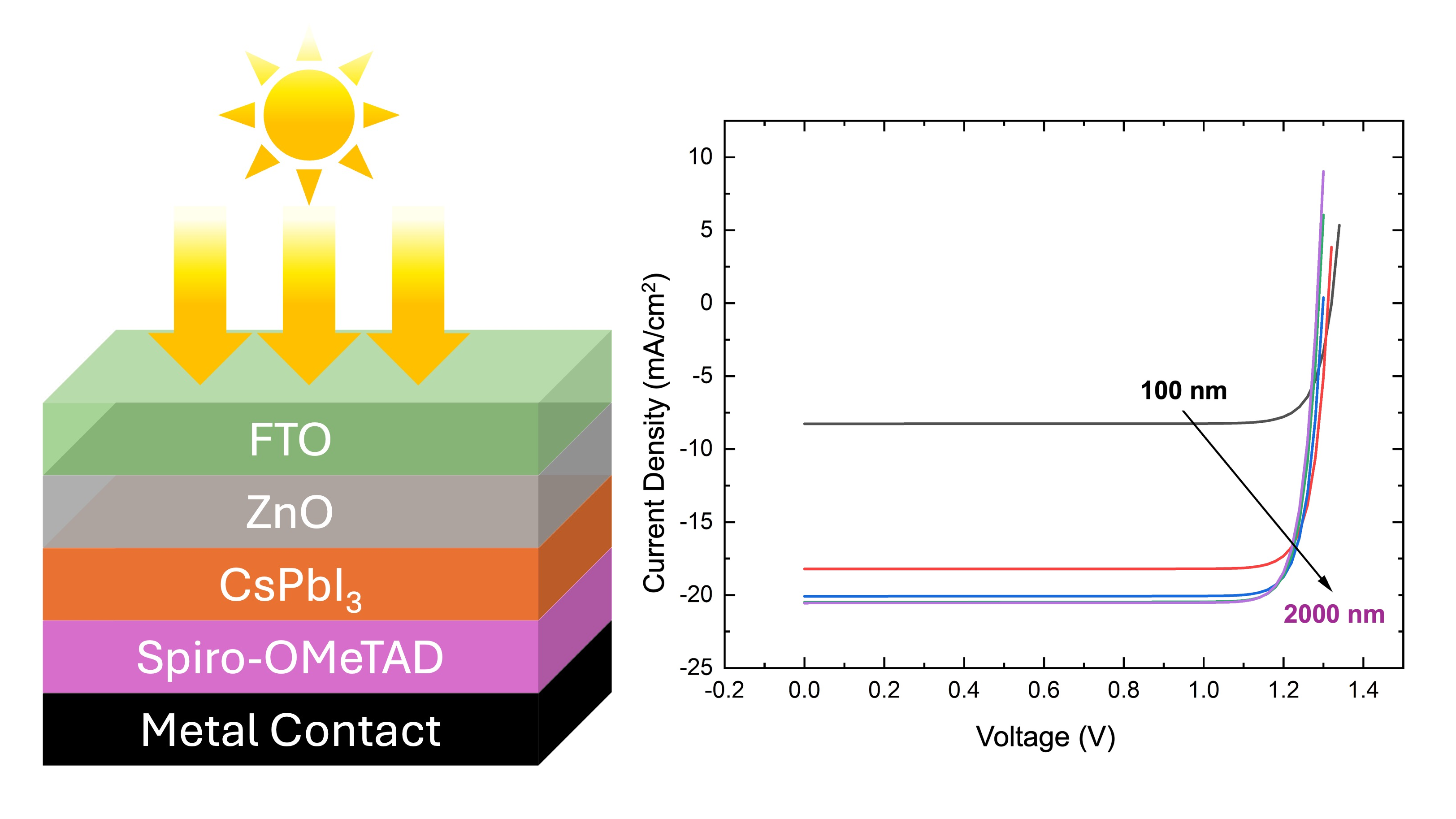
This study investigates the optimization of CsPbI<sub>3</sub>-based perovskite solar cells using SCAPS-1D simulation with a device structure of FTO/ZnO/CsPbI<sub>3</sub>/Spiro-OMeTAD/metal. Key parameters, including absorber thickness, defect density, acceptor concentration, and transport layer properties, were systematically analyzed. The results show that absorber thickness significantly affects device performance, with an optimal thickness of 1.6 μm yielding an efficiency of 17.66%. Optimization of defect density and acceptor concentration further enhances device performance. After overall optimization, the power conversion efficiency increases from 16.3% to 23.1%, with *V*<sub>oc</sub> improving from 1.19 V to 1.39 V, *J*<sub>sc</sub> from 18.33 to 20.5 mA/cm<sup>2</sup>, and FF from 75.2% to 87.4%. The improvement is supported by enhanced J–V characteristics and near-unity quantum efficiency over a wide wavelength range. These results demonstrate that parameter optimization plays a crucial role in achieving high-performance CsPbI<sub>3</sub> perovskite solar cells.

Effect of Composition and Morphology of Electrospun Polyacrylonitrile/Polyvinylpyrrolidone (PAN/PVP) Nanofibers on Adsorption of Methylene Blue and Congo Red Dyes

Full Text New Website
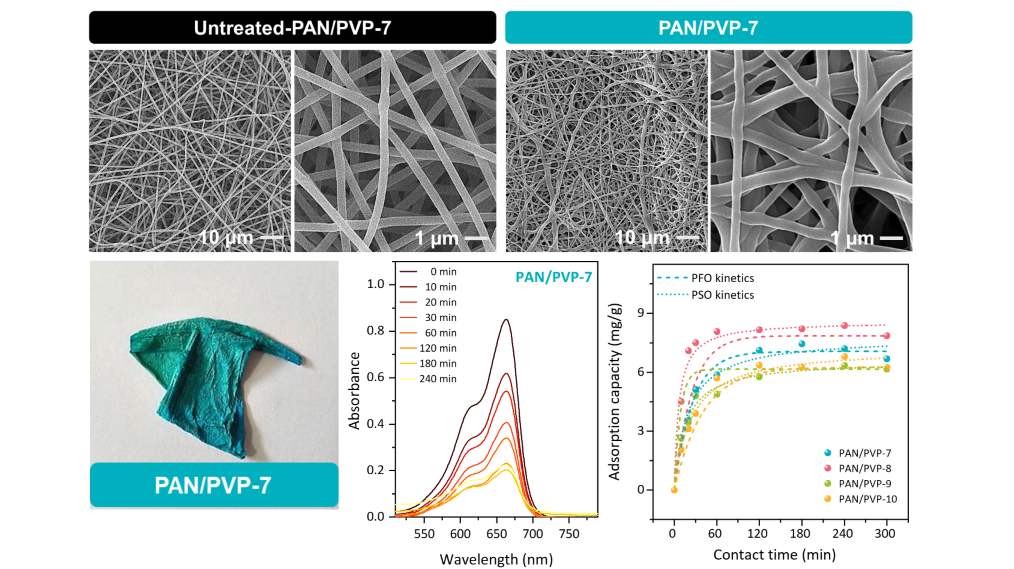
Synthetic dyes such as methylene blue (MB) and Congo red (CR) are persistent water pollutants requiring efficient removal. This study examines the effect of composition and morphology on the adsorption performance of electrospun polyacrylonitrile/polyvinylpyrrolidone (PAN/PVP) nanofiber membranes. PAN/PVP fibers with different PAN loadings (0.7–1.0 g, total polymer mass 1.3 g) were fabricated by electrospinning and subjected to hot-water soaking at 80 °C followed by thermal treatment at 200 °C. SEM and FTIR confirmed continuous nanofibrous networks containing both PAN and partially removed PVP, with only subtle morphological differences among compositions. Batch adsorption tests showed preferential uptake of MB over CR, with the highest MB capacity of 8.38 mg g<sup>−1</sup> obtained for the PAN/PVP-8 membrane and the highest CR capacity of 3.32 mg g<sup>−1</sup> obtained for the PAN/PVP-10 membrane, with only modest variation among the other ratios. Kinetic analysis revealed that MB and CR adsorption follow a pseudo-second-order model, indicating surface-controlled uptake and suggesting that further improvement will require targeted surface functionalization.

A Novel Fiber Collection System for Rotary Force Spinning Method

Full Text New Website
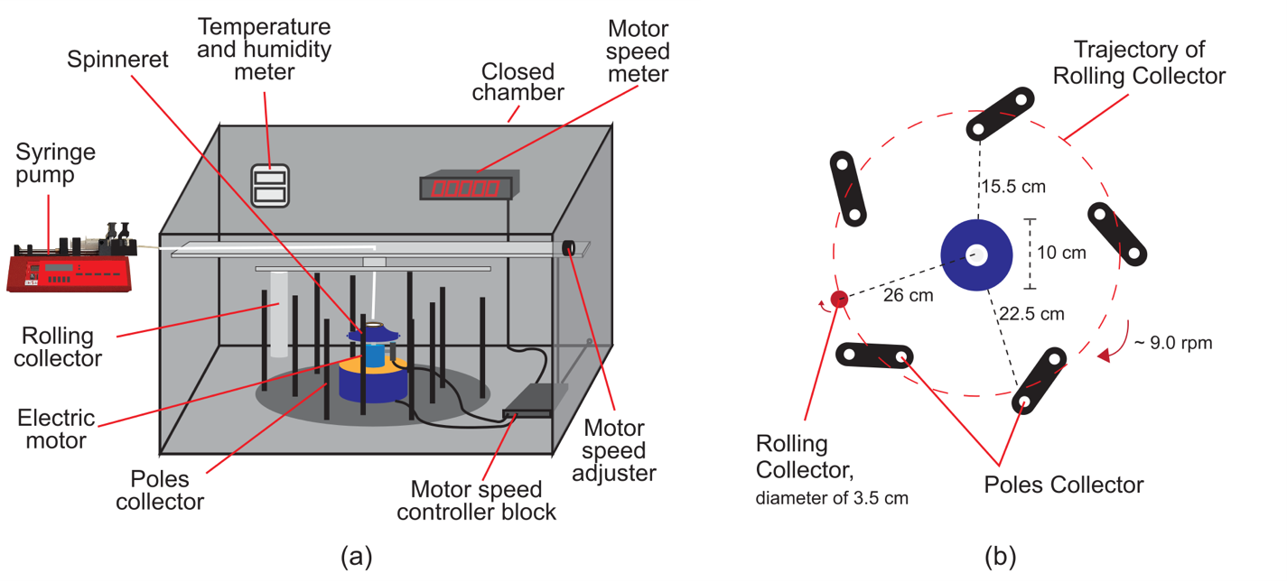
Recent advancements in micro- to nano-scale fiber production, particularly through rotary force spinning (RFS), offer high production rates but face challenges in optimizing fiber collection efficiency. This study investigates the effect of spinneret angular speed on fiber collection performance of a novel RFS collector system. The collector system integrated zig-zag pole collectors with a rolling collector that seamlessly traverse between the poles for fiber assembly. This configuration enabled the produced fibers to be continuously assembled onto the rolling collector, thereby forming fibrous membranes directly during the spinning process. The collection performance was evaluated using polyvinylpyrrolidone (PVP) fibers fabricated at spinneret angular speeds ranging from 4000 to 11000 rpm. The results showed that the rolling collector captured up to 95.39% of the produced fibers at a high rotational speed of 11,000 rpm, whereas at lower rotational speed, most fibers were deposited onto the pole collectors, reaching 95.19% at 4000 rpm. These findings indicate that the proposed collector system effectively enhances fiber collection efficiency over a broad rotational speed range while enabling direct fibrous membrane formation in the RFS process.